

Table of Contents:
- Patient Intake for Healthcare Industries
- The Invisible Barrier of Healthcare Industry
- Fixing the No-Show Problem
- Patient Initiates Contact
- Chatbot Collects the Essentials
- Real-Time Slot Availability
- Instant WhatsApp Confirmation
- Automated WhatsApp Reminders
- Why Just Building an App Doesn't Work
- The Modern Patient Experience
- Hospital Appointment Booking
- Frequently Asked Questions
Anantya’s Custom APIs are Boosting Patient Intake for Healthcare Industries
A software company’s biggest enemy and dearest friend is both- another software company.
Simplex Himes is an IT service company in Middle East & Africa that provides excellent management capabilities with their customized software that keeps hospital operations (technical ones) running smoothly. However, they noticed a major roadblock at the very initial interaction of the patient experience: the booking process.
When we think about improving healthcare, our minds usually go straight to the medical marvels like state-of-the-art MRI machines, robotic surgery, or new medicines. We rarely think about the front desk.
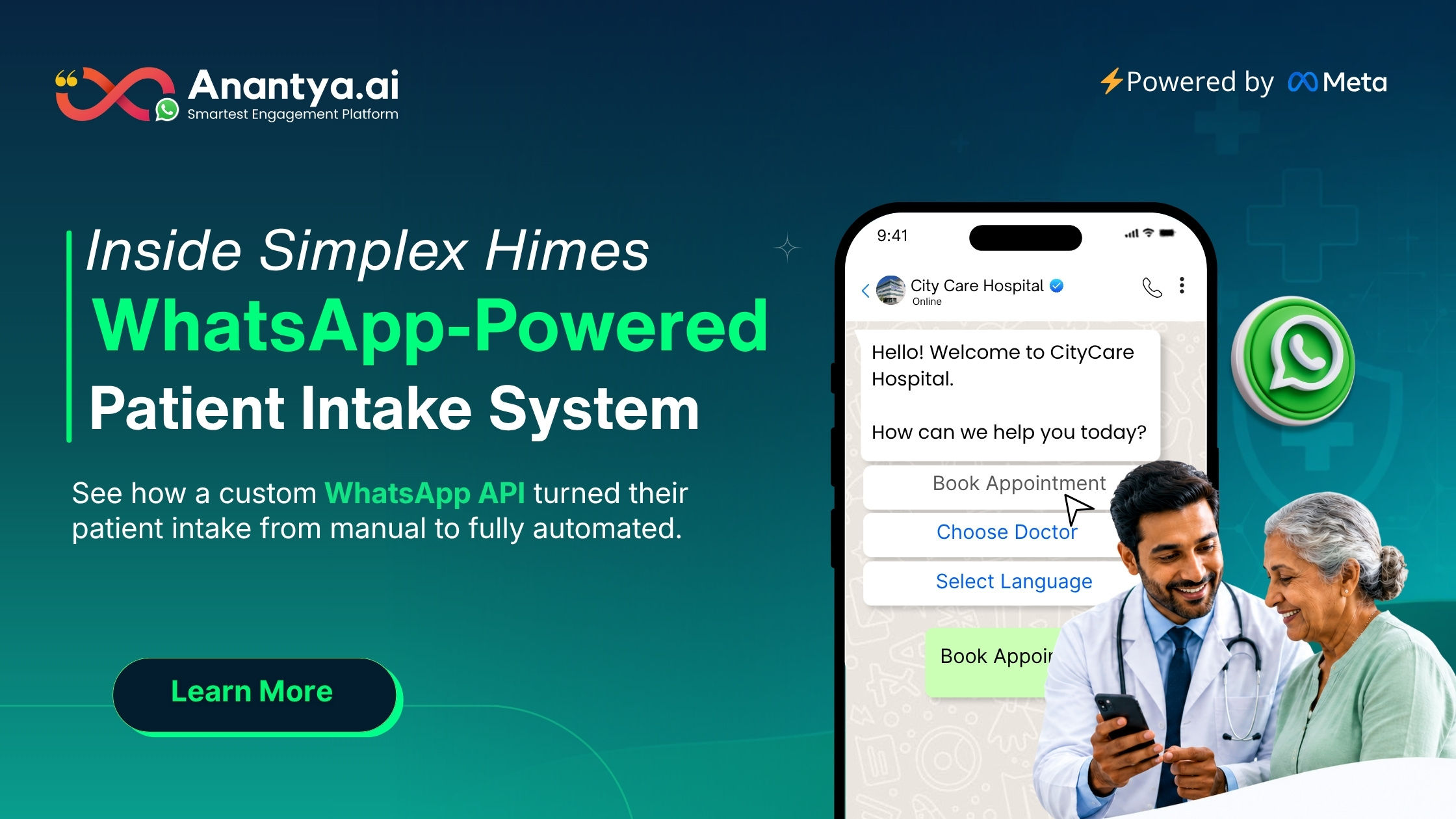
Simplex Himes realized that to truly help healthcare providers, they can ease this process by automating the appointment booking process. They needed a solution that was instant, familiar, and incredibly easy to use.
To achieve this, they partnered with Anantya.ai to build a revolutionary, yet incredibly simple solution.
Anantya didn't build a complicated new software program. Instead, they used a WhatsApp chatbot for hospitals to turn the app that everyone already has on their phone into a fully automated, 24/7 digital front desk.
This case study is a detailed description of the process, purpose, and the impact it made on the daily lives of patients and hospital staff.
The Invisible Barrier of Healthcare Industry
Most hospitals run on good intentions and overworked staff.
Simplex Himes's hospital clients were no exception. Their clinical teams were delivering strong care. The systems behind patient management were working just fine. The problem wasn't the clinical care itself. Patients were getting lost due to pre-admission hurdles that remain common across the healthcare industry.
Booking a doctor’s appointment induces enough anxiety as it is. Dialing the number that's often busy. Or it rang outside working hours. Or the patient didn't speak the same language as the staff on the other end.
And when a patient finally gets through, the staff has to manually note down their name, preferred time, and the available doctor. For hospitals handling hundreds of inquiries a day, this system was not just slow. It was breaking.
This wasn't a healthcare problem. It was a communication problem.
Simplex Himes saw this clearly. Their software could manage everything happening inside the hospital but the entry point was still broken. They needed to fix the door before they could improve what was inside.

Fixing the "No-Show" Problem of Medical Industry
When Simplex Himes came to Anantya, the brief was precise.
Build something that works without training. Something patients trust. Something that doesn't require downloading a new app, creating a new account, or learning a new interface.
The answer was already on every patient's phone.
WhatsApp has near-universal adoption across the Middle East & Africa. Patients already use it every day. They know how it works. They trust it. All we had to do was meet them there.
Here's how the workflow was designed:
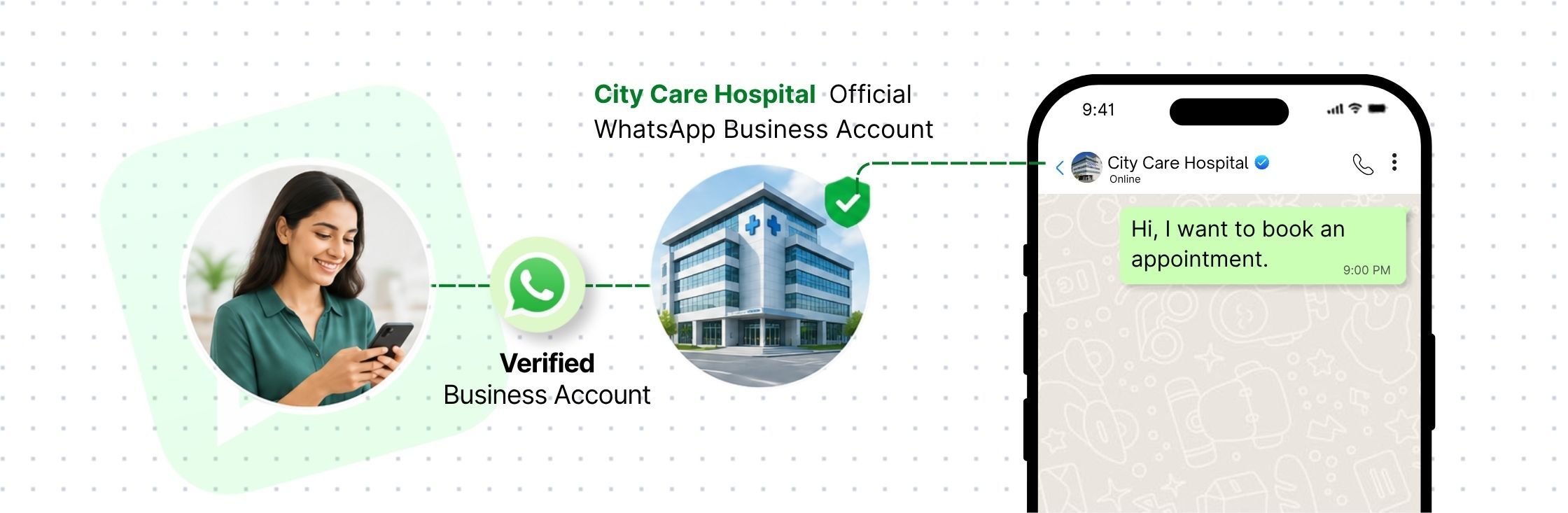
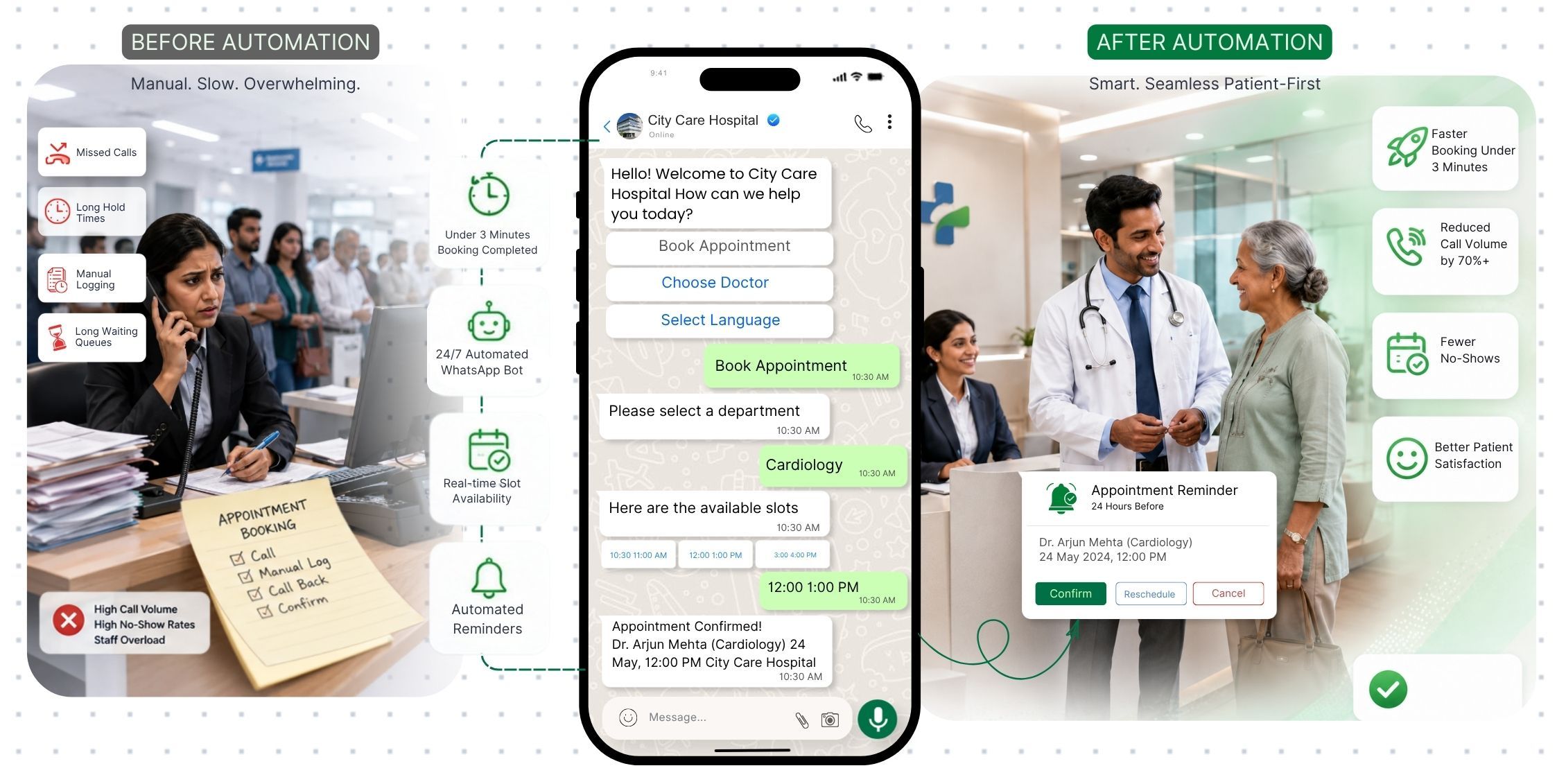
Patient initiates contact
A patient sends a WhatsApp message to the hospital's verified business number.
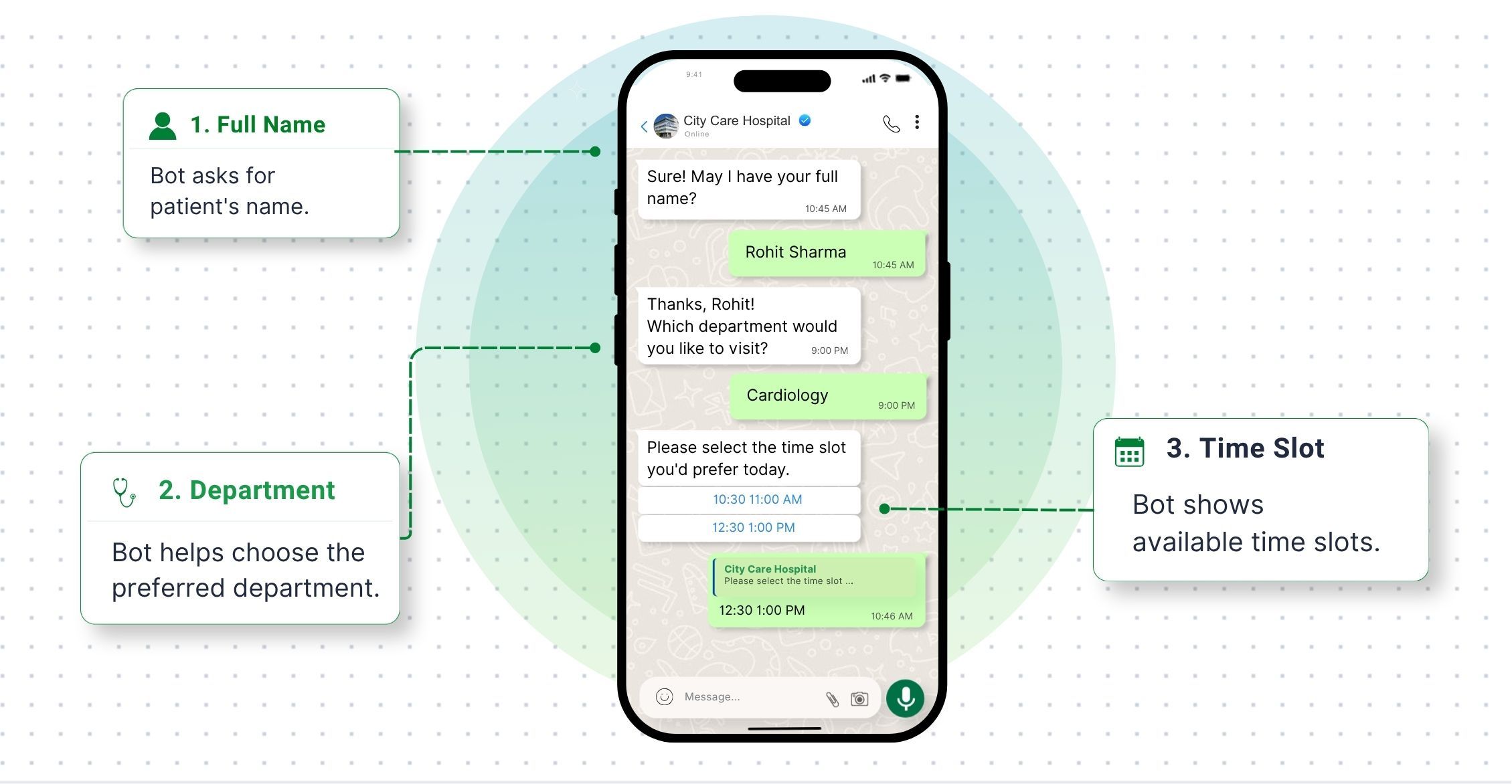
The chatbot collects the essentials
The automated WhatsApp chatbot for hospitals guides the patient through a short, conversational flow asking for their name, preferred department, and available time slots.
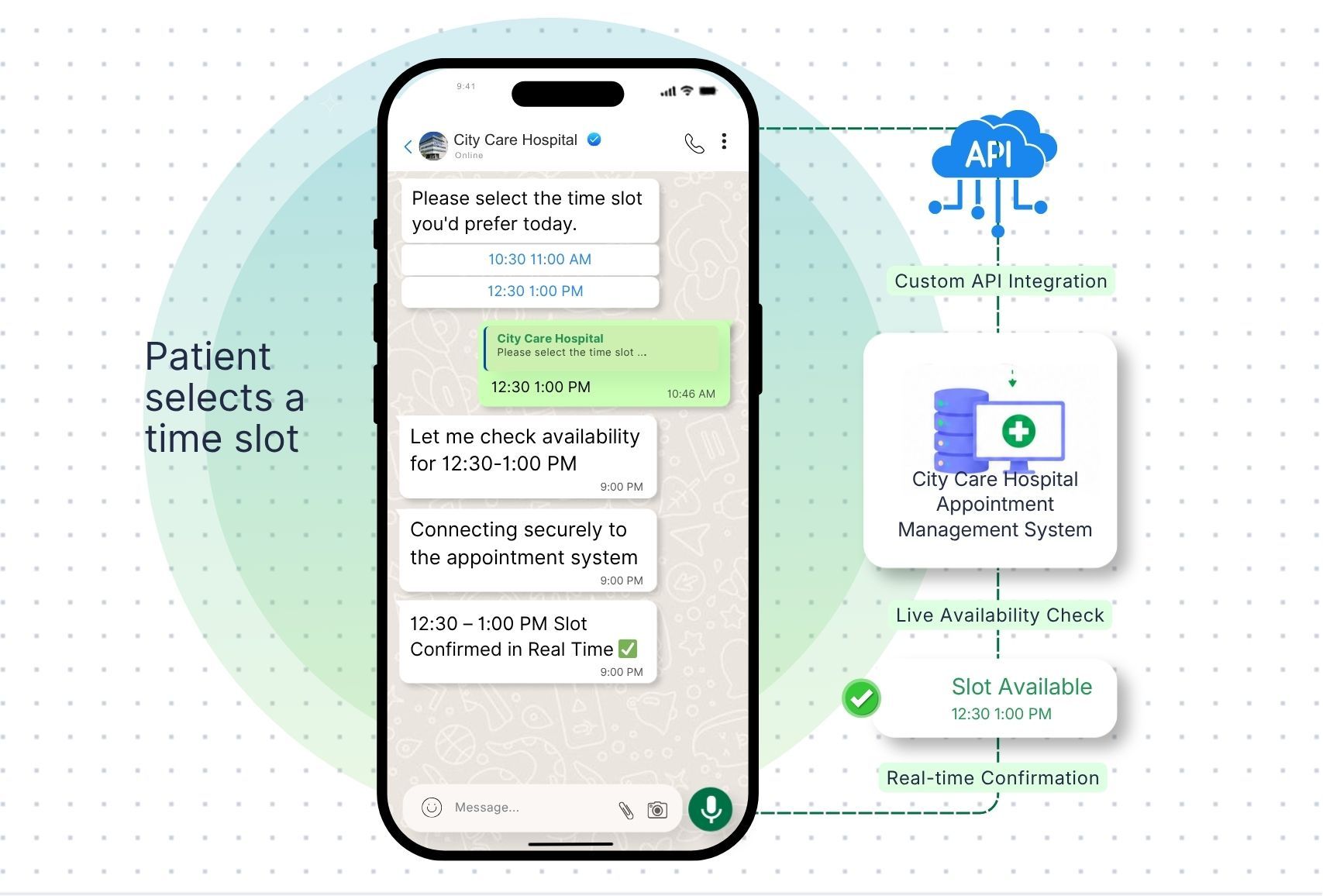
Real-time slot availability via custom API
This is where Anantya's custom API integration did the heavy lifting. The chatbot was directly connected to the hospital's existing appointment management system.
When a patient selected suitable time, the bot checked live availability and confirmed the slot in real time.
Instant confirmation sent via WhatsApp
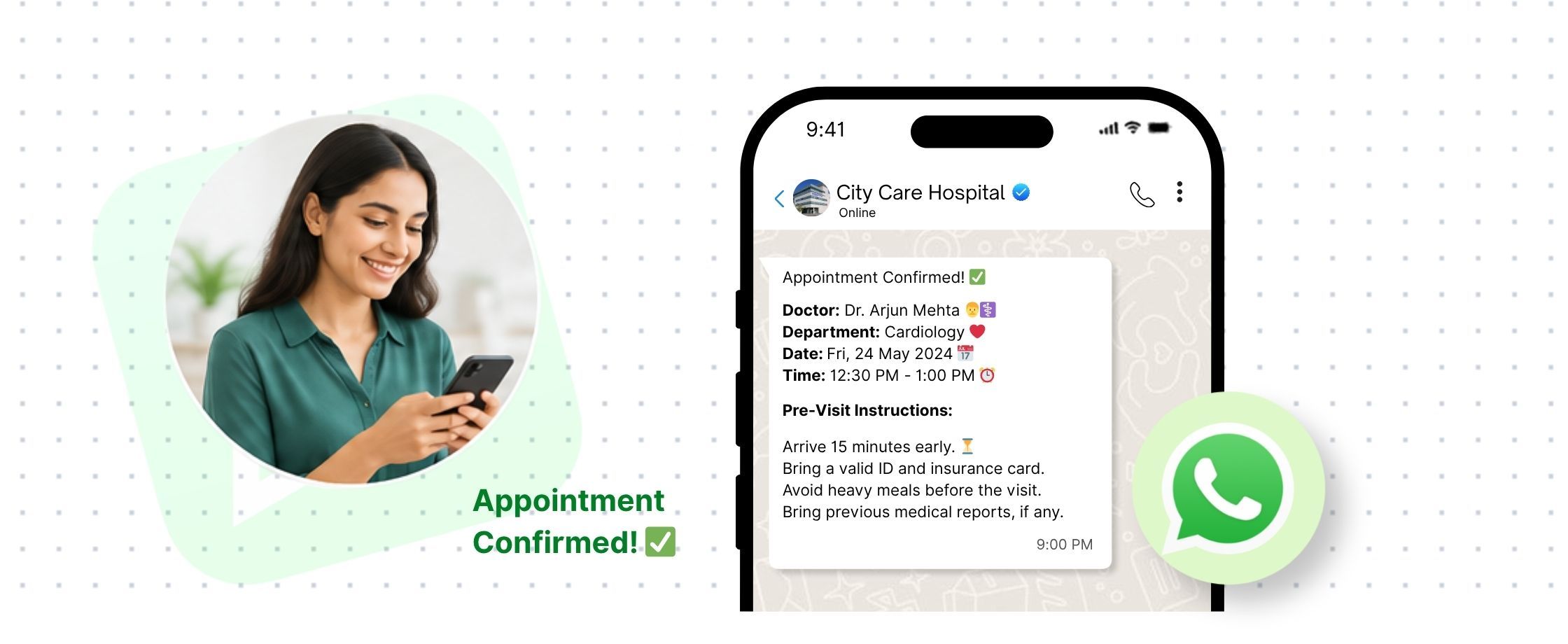
The moment a slot was confirmed, the patient received a WhatsApp message with their appointment details, the doctor's name, department, and any pre-visit instructions.
Automated reminders
24 hours before the appointment, the system sent an automated reminder. Patients could confirm, reschedule, or cancel all within the same WhatsApp thread.
The entire flow was built to integrate with Simplex Himes's existing hospital management software. We didn't ask them to replace anything they had built. We simply connected it to WhatsApp.
Why "Just Building an App" Doesn't Work
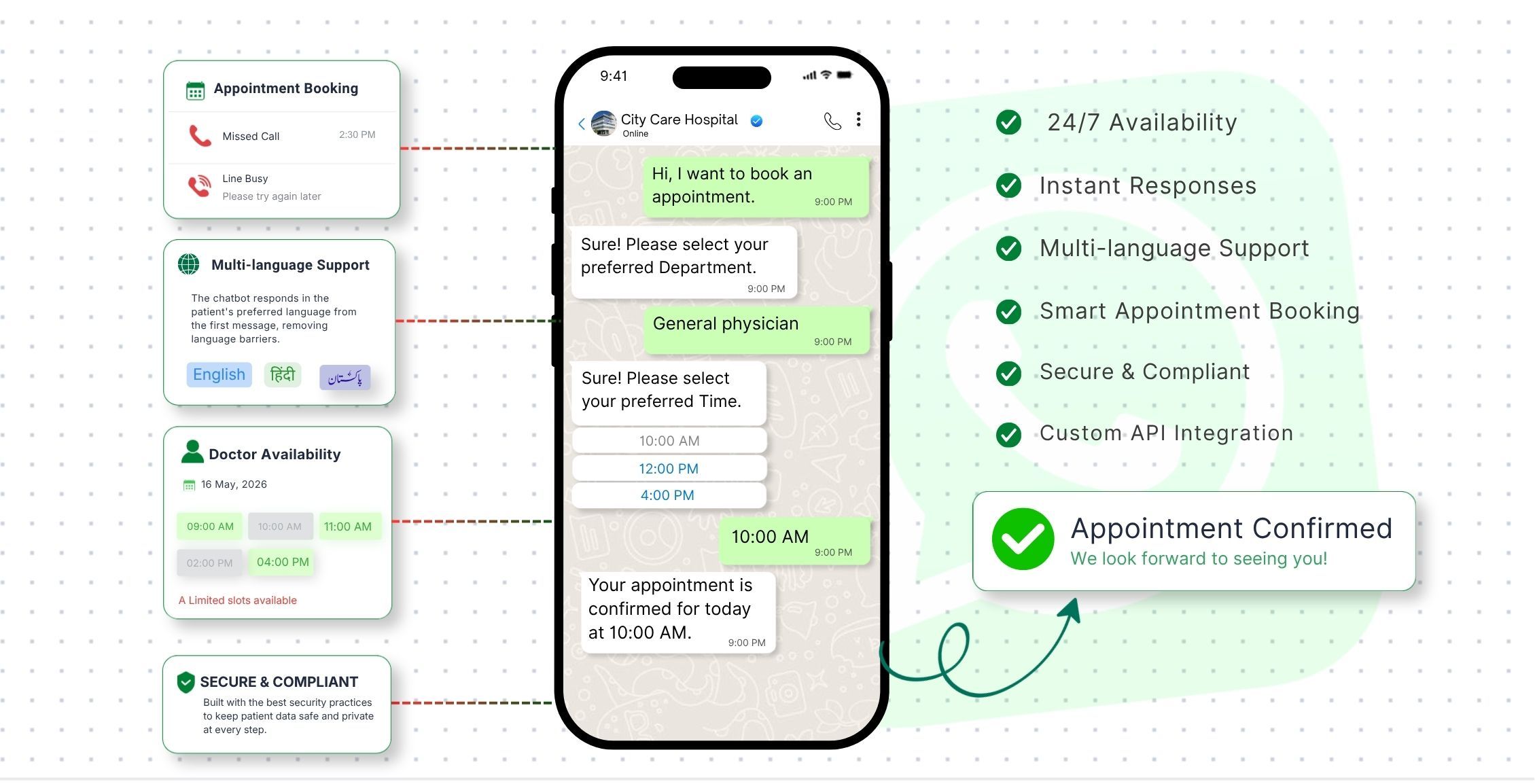
The integration had two distinct challenges.
The first was technical. Hospital management systems are not built for external API connections by default. They are built for internal use, secure, stable, and deliberately closed. Building a reliable bridge between Anantya's WhatsApp Business API and Simplex Himes' hospital software required custom API development that could handle real-time data requests without disrupting the core system.
Anantya's team mapped the data flow end to end before a single line of code was written. The goal was to make sure that every appointment confirmed through WhatsApp reflected instantly in the hospital's internal calendar and vice versa. No duplication. No discrepancy.
The second challenge was conversational design. A chatbot is only as good as the conversation it holds. A patient reaching out to book a hospital appointment is already slightly anxious. The last thing they need is a clunky, confusing flow that makes them feel like they're filling out a government form.
Every message in the chatbot flow was written to feel human. Short questions. Clear options. Reassuring confirmations. The bot was also built to handle drop-offs if a patient stopped midway through the booking, it would send a gentle follow-up nudge within the hour.
Language was another consideration. The hospitals served multilingual patient populations. The chatbot was built to respond in the patient's preferred language from the first message removing one more barrier between the patient and their appointment.
The full implementation from API development to chatbot design to testing was completed and live within a few weeks.
A Day in the Life- The Modern Patient Experience
The results came quickly.
Appointment booking time dropped significantly. What previously required two or three touchpoints~ an initial call, a manual log, and a confirmation callback was now resolved in a single WhatsApp conversation under three minutes.
Front desk call volume fell sharply. Staff who were previously fielding hundreds of booking-related calls per day were now handling a fraction of that number. The time freed up was redirected to in-clinic patient support where it was needed far more.
No-show rates declined. The automated reminder system had a direct impact. Patients who received a WhatsApp reminder 24 hours before their appointment were significantly more likely to show up or to reschedule in advance, allowing the slot to be filled.
Patient satisfaction improved. The feedback Simplex Himes collected consistently highlighted one thing: patients appreciated being able to book at any hour, without waiting on hold, in a format they already used every day.
The hospital staff noticed the shift too. The front desk wasn't a bottleneck anymore. It was functioning the way it was always supposed to as a point of care, not a point of friction.
Every Healthcare Provider Has a Different Door. We Build the Right Key.
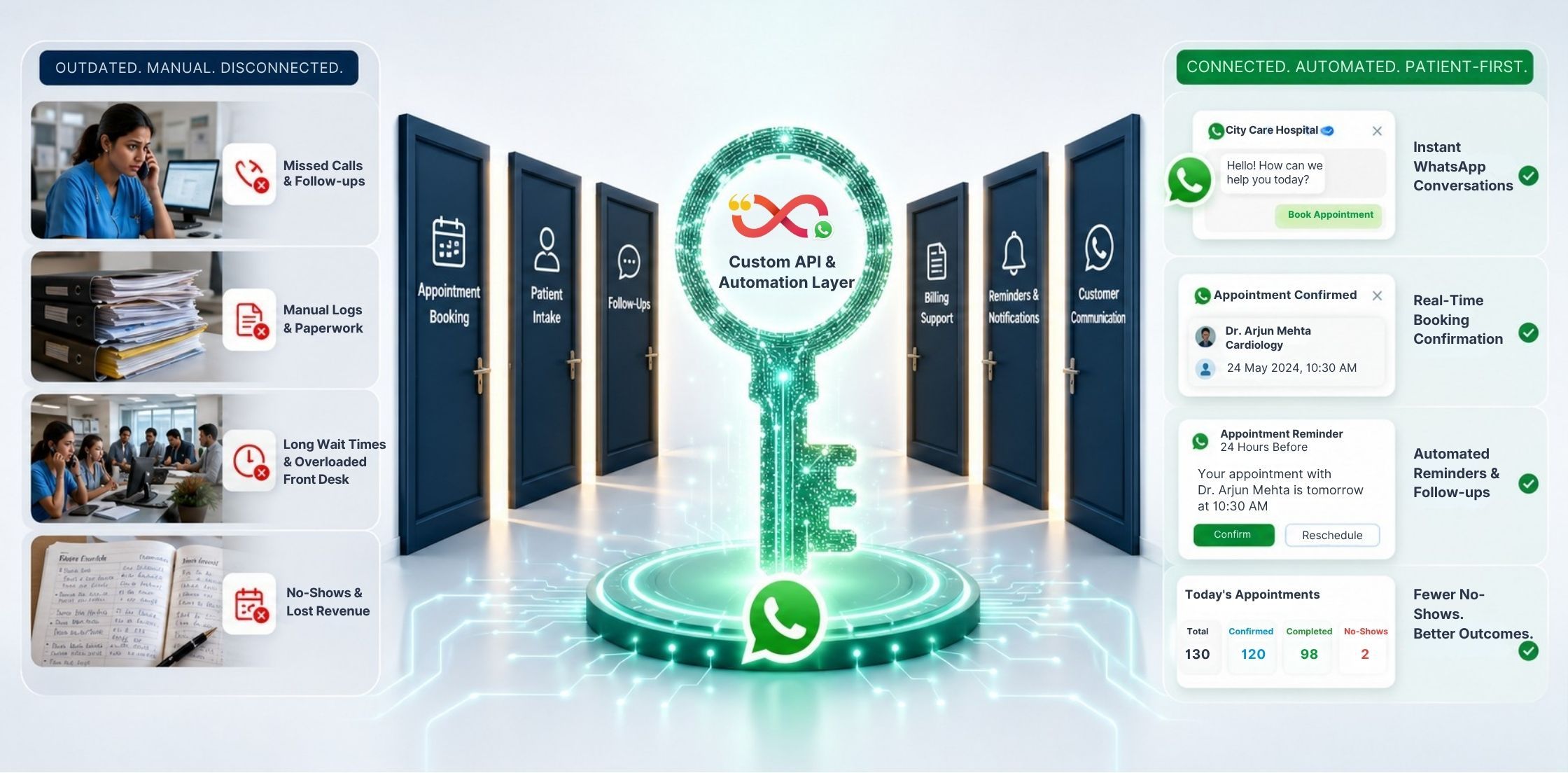
This case study is about hospital appointment booking. But the underlying challenge is universal.
Every healthcare provider has a point in their patient journey where a manual, slow, or outdated process is quietly costing them in missed appointments, in staff time, in patient frustration, and ultimately in trust.
Simplex Himes came to Anantya with a specific problem and a specific system. We didn't offer them a template. We built a solution that connected directly to what they already had without asking them to rebuild from scratch.
That's the way Anantya approaches every integration. We start by understanding the existing workflow. We identify the exact point of friction. And we build a custom API or automation layer that fixes that point without disrupting everything around it.
If you're working with healthcare providers, enterprise clients, or any business where patient or customer intake involves manual steps, repeated touchpoints, or missed follow-ups there's a version of this solution that fits your context.
We'd be glad to help you find it.
Talk to the Anantya team about building a custom WhatsApp automation for your industry.
Create Your Anantya.ai Account
Frequently Asked Questions
Healthcare is any service that helps people stay healthy or get better when they're sick. But before any of that can happen, a patient has to book an appointment. If that process is confusing, slow, or only available during office hours, many people simply give up. Making it easy to book is one of the most important and most ignored parts of delivering good health care.
AI in healthcare is taking over the repetitive tasks that used to need a person like answering booking calls, checking available slots, and sending confirmations. Now, a patient can message a hospital on WhatsApp, pick a time, and get a confirmed appointment in minutes. No hold music. No callbacks. It saves time for patients and takes pressure off hospital staff.
One of the simplest wins AI in medicine offers is the automated reminder. A WhatsApp message sent the day before an appointment gives patients a chance to confirm, reschedule, or cancel. When they cancel early, the hospital can fill that slot with someone else. It sounds simple because it is. But it makes a real difference to how efficiently hospitals run day to day.
Hospitals in the Middle East and Africa are using artificial intelligence in healthcare to handle tasks that used to require full-time staff. WhatsApp chatbots, connected to hospital booking systems, let patients schedule appointments in their own language, at any time of day. Companies like Simplex Himes are already doing this and it's working. Patients get faster service, and hospitals get fewer missed calls and fewer missed appointments.
The healthcare IT market is moving away from phone-based booking and toward messaging and automation. Hospitals are looking for tools that work with what they already have not expensive new systems that take months to set up. The fastest-growing solutions in the medical market right now are ones that slot into existing hospital software and immediately reduce the admin burden on staff.
AI in the medical field handles the repetitive communication tasks so staff don't have to. When a WhatsApp chatbot is managing appointment bookings, the front desk stops being flooded with calls. Staff can spend that time actually helping patients who are already in the building. It's not about replacing people, it's about making sure their time goes toward work that actually needs a human.
The health system in India is dealing with massive patient volumes, many languages, and patients who may not be comfortable with complicated digital tools. What works is something they already know how to use. WhatsApp fits that perfectly. A chatbot that books appointments, sends reminders, and responds in the patient's language without any app download is a practical fix that can scale across the healthcare system in India without a huge investment.
Yes. The healthcare industry in India needs solutions that work for everyone, not just tech-savvy city patients. WhatsApp is already on most phones across India, including smaller towns. When a hospital connects it to their booking system, patients can schedule appointments the same way they message a friend. That kind of familiarity removes the anxiety that often stops people from reaching out in the first place.
A well-built medical AI chatbot picks up on the language a patient writes in and responds in the same language automatically. For hospitals serving mixed communities which is the norm across India, the Middle East, and Africa this matters a lot. A patient who isn't comfortable in English shouldn't have to struggle to book a doctor's appointment. Language should never be a barrier to basic healthcare medical access.
WhatsApp is already on almost every phone. Patients don't need to learn anything new to use it. For the healthcare sector, that's a big deal. The biggest reason automation fails is because patients don't adopt it. When the booking process feels as natural as texting a friend, more people actually use it. That means fewer missed appointments, less pressure on staff, and a better experience for everyone involved.
Table of Contents:
- Patient Intake for Healthcare Industries
- The Invisible Barrier of Healthcare Industry
- Fixing the No-Show Problem
- Patient Initiates Contact
- Chatbot Collects the Essentials
- Real-Time Slot Availability
- Instant WhatsApp Confirmation
- Automated WhatsApp Reminders
- Why Just Building an App Doesn't Work
- The Modern Patient Experience
- Hospital Appointment Booking
- Frequently Asked Questions