

Facebook and Instagram are no longer just platforms for publishing content and running advertisements. For businesses, they are increasingly important customer communication channels where people discover products, request pricing, respond to campaigns, and express purchase intent.
The challenge is that these conversations can quickly become difficult to manage when they are spread across separate platforms and handled manually.
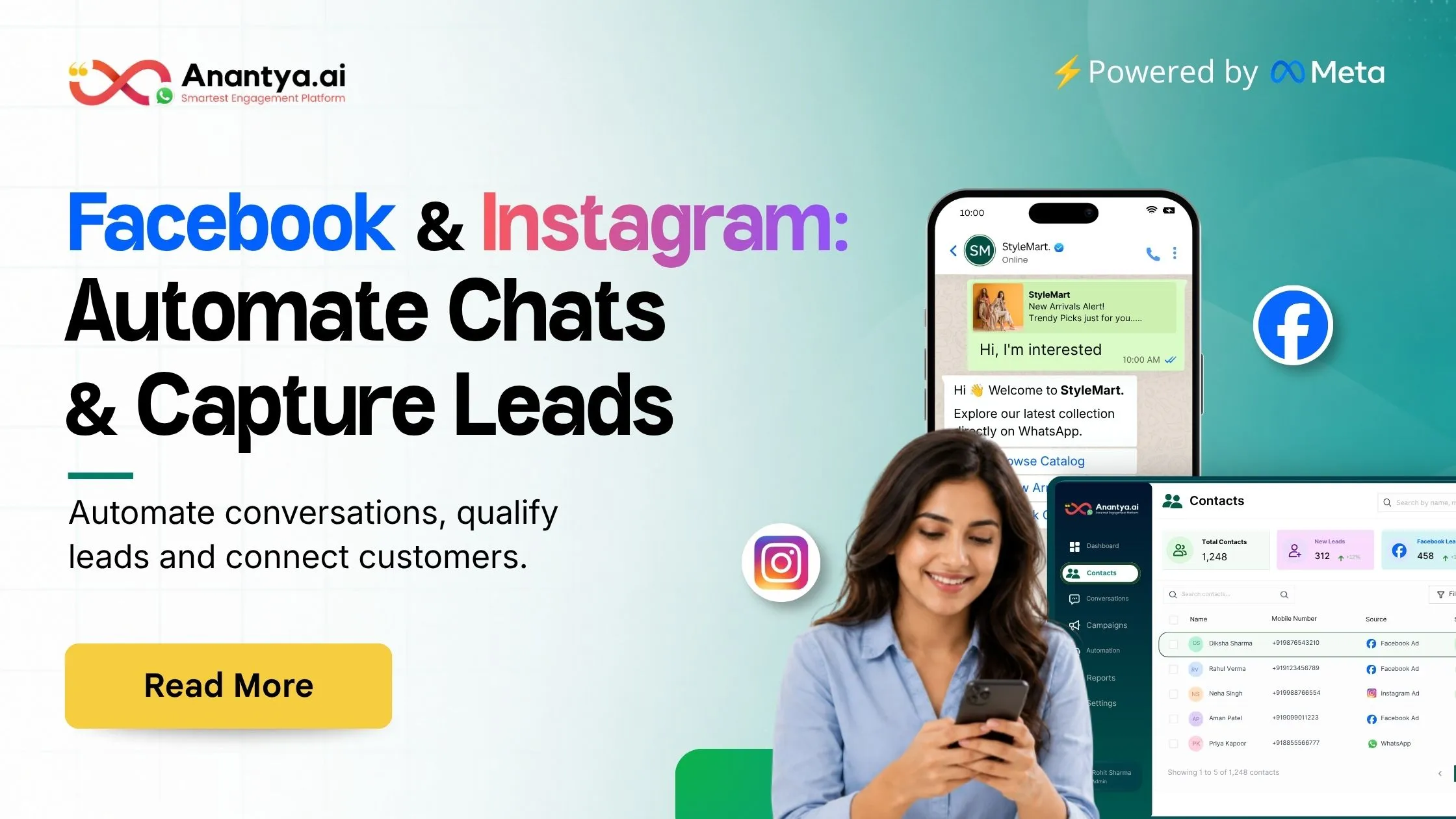
Facebook and Instagram integration with Anantya.ai brings these conversations into a centralized communication environment, where businesses can automate first-level responses, qualify leads, route conversations to the right teams, and connect social interactions with WhatsApp journeys.
Instead of treating social media as a destination for awareness alone, businesses can turn conversations into structured customer journeys:
What Is Facebook Instagram Integration for brands?
Facebook and Instagram integration connects a business's social messaging channels with a centralized customer communication platform.
With Anantya.ai, businesses can bring relevant Facebook and Instagram conversations into a shared environment and combine them with chatbot automation, lead qualification, agent routing, and WhatsApp journeys.
This means a customer interaction that begins with a Facebook message, Instagram DM, Story interaction, or campaign can become part of a structured customer journey instead of remaining isolated within a social media inbox.
Why Do Businesses Need Facebook and Instagram Messaging Integration?
Social media can generate significant customer interest, but an inquiry does not automatically become a qualified lead.
A customer may see an advertisement or post and immediately ask:
What is the price?
Is the product available?
Do you deliver to my location?
Which product should I choose?
Can I speak to someone?
How can I book a consultation?
When these questions are handled manually, every inquiry requires an agent's time. As the volume of conversations increases, businesses may experience slower responses, missed inquiries, and additional operational workload.
Facebook and Instagram messaging automation helps businesses handle the repetitive parts of these conversations while keeping human agents involved when their expertise is needed.
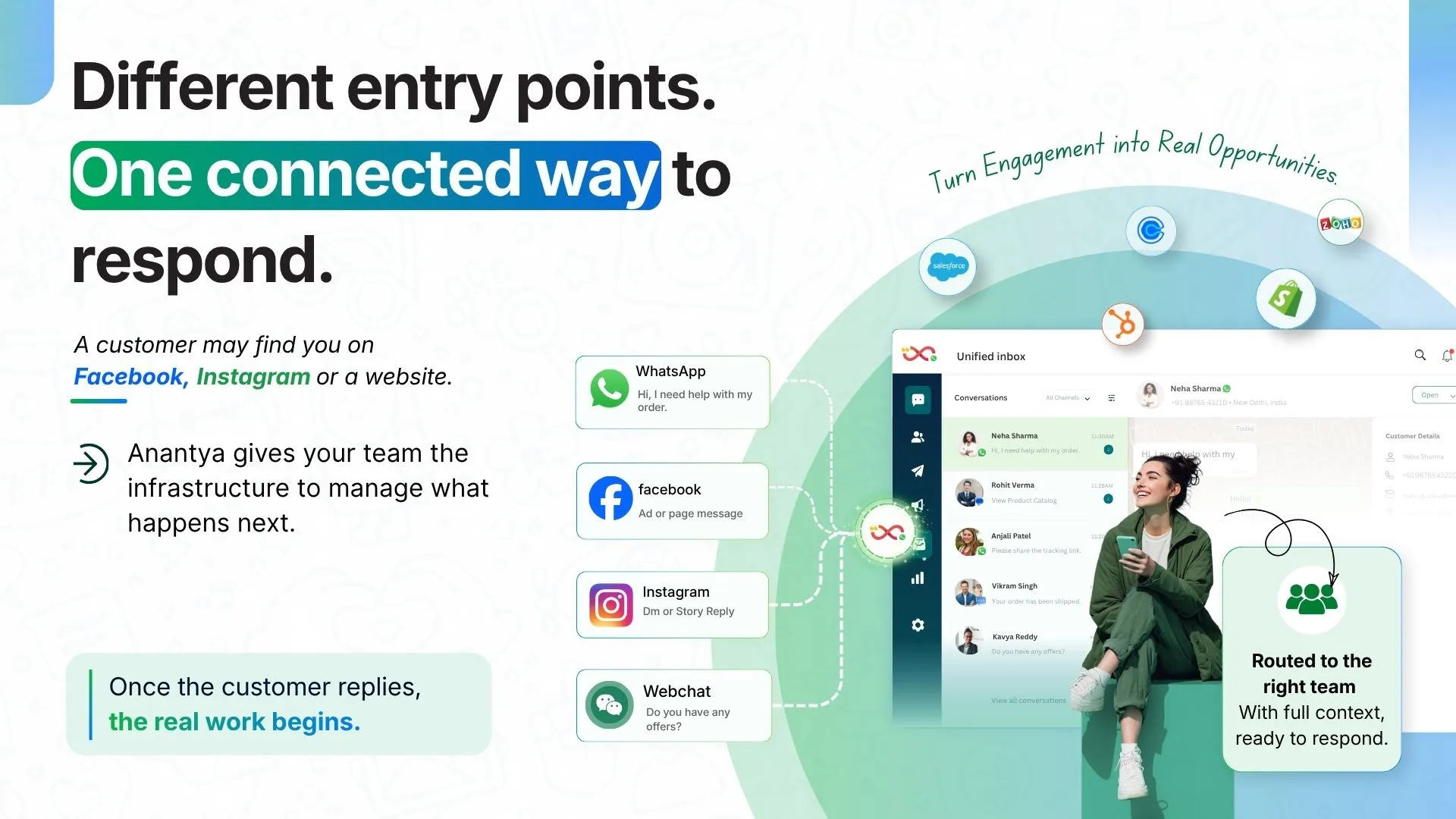
Customer conversations are scattered across platforms
A customer may contact a business through Facebook while another sends an Instagram DM.
If teams manage these channels separately, agents have to monitor different platforms and interfaces throughout the day. This makes it harder to maintain a centralized view of customer conversations and activity.
A centralized communication environment gives customer-facing teams a more organized way to manage these interactions.
Customers expect quick responses
Social media does not operate according to a traditional 9-to-5 schedule.
Customers can send messages during evenings, weekends, or outside business hours. Without automation, they may have to wait until an agent becomes available.
Automated responses can handle common questions and provide an initial response even when the relevant team is unavailable.
Not every inquiry is ready for sales
A customer saying "I'm interested" does not necessarily give a sales representative enough information to have a productive conversation.
Depending on the business, the initial conversation may need to establish:
Customer name
Requirement
Product or service of interest
Location
Budget
Quantity
Preferred service
Other business-specific information
A chatbot can collect this information during the initial interaction, allowing the sales team to receive more context when the conversation is handed over.
Different inquiries need different teams
Customer conversations can also belong to different departments.
A product inquiry may need sales assistance, while a billing question may need accounts or an existing customer issue may require support.
With routing logic, businesses can direct conversations based on the customer's requirement instead of sending every inquiry to the same team.
How Does Facebook and Instagram Integration Work With Anantya.ai?
Anantya.ai acts as a communication layer between social channels, automation workflows, and customer-facing teams.
Businesses can connect supported Facebook and Instagram conversations with chatbot automation, lead qualification, routing, and human-agent support.
The automation handles the initial part of the conversation, while the business can bring in a human agent when the interaction requires personal assistance.
This makes automation and human support part of the same customer communication process rather than separate systems.
Facebook Messenger Integration for Business
Facebook can serve as both a customer communication and lead-generation channel.
With Facebook Messenger integration, incoming customer conversations can be managed through Anantya's centralized Team Inbox. This allows agents to view and respond to conversations without constantly switching between platforms.
Businesses can use Facebook Messenger integration to:
Manage incoming customer messages
Respond to customer inquiries
Continue ongoing conversations
Direct inquiries to the appropriate team
Support lead-generation journeys
Connect Messenger interactions with broader business workflows
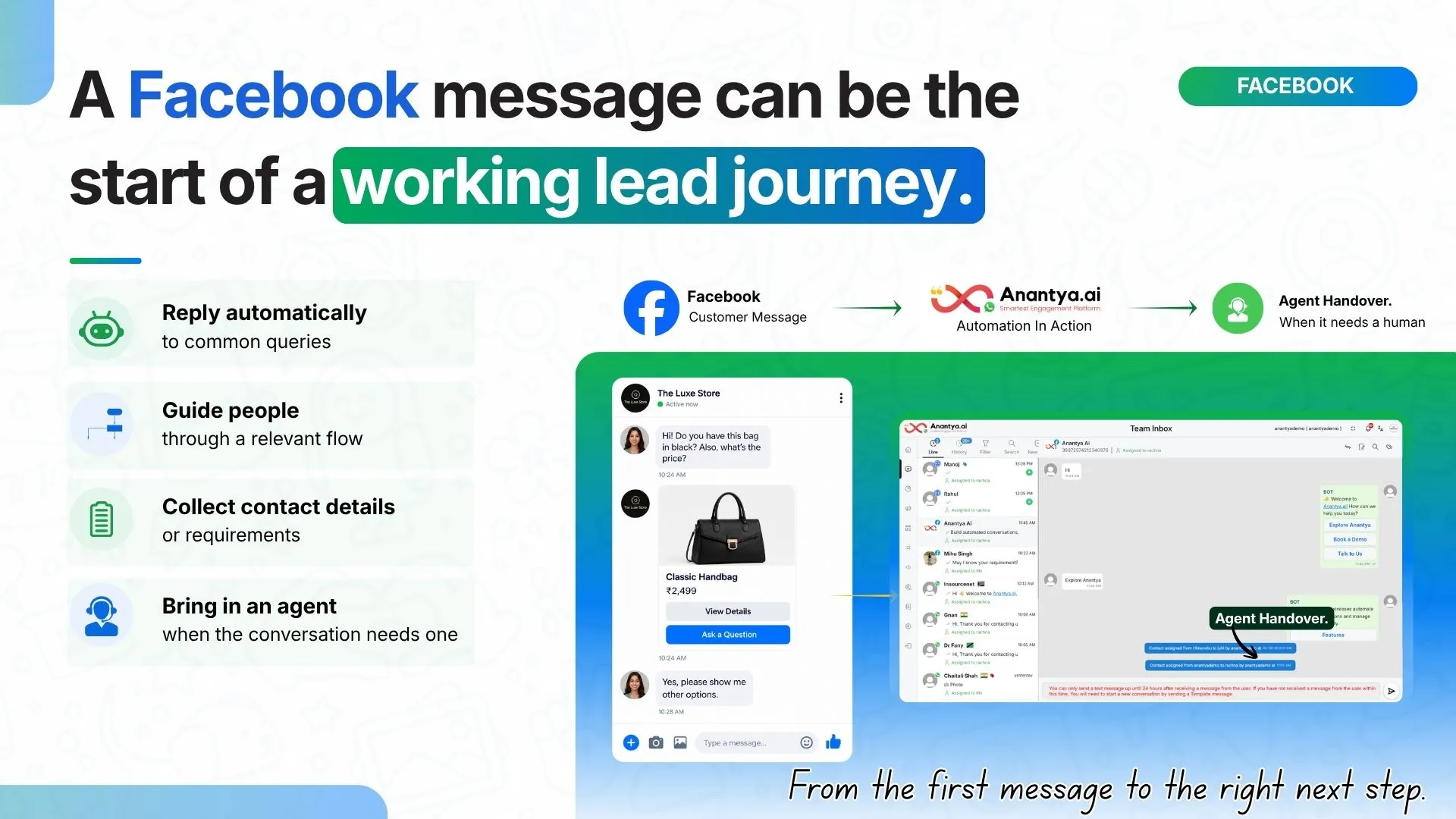
Facebook chatbot automation
A Facebook chatbot can handle common first-level questions automatically.
For example, when a customer asks about a product, the chatbot can provide options such as product information, pricing, availability, or speaking with an expert.
This is particularly useful for businesses receiving repetitive questions that do not always require an agent's involvement.
Instead of an agent answering the same basic questions repeatedly, the chatbot can handle the initial interaction and involve a person when the conversation requires further assistance.
Instagram DM Automation for Business
Instagram is another important starting point for customer conversations.
Customers may contact businesses through:
Instagram DMs
Story interactions
Campaign-related conversations
Product inquiries
Service inquiries
General questions
With Instagram integration, relevant customer conversations can enter the business's centralized communication environment rather than requiring agents to monitor Instagram separately.
Instagram chatbot for business
An Instagram chatbot can help businesses automate common customer interactions, provide product or service information, collect requirements, and qualify potential leads.
For example, a customer asking about a product can be guided toward information about pricing, availability, consultation, or speaking with an expert.
Once the chatbot has gathered the necessary information, the conversation can be handed over to an agent when human assistance is required.
This makes Instagram more than an awareness channel. It can become an entry point for customer engagement, lead generation, and sales conversations.
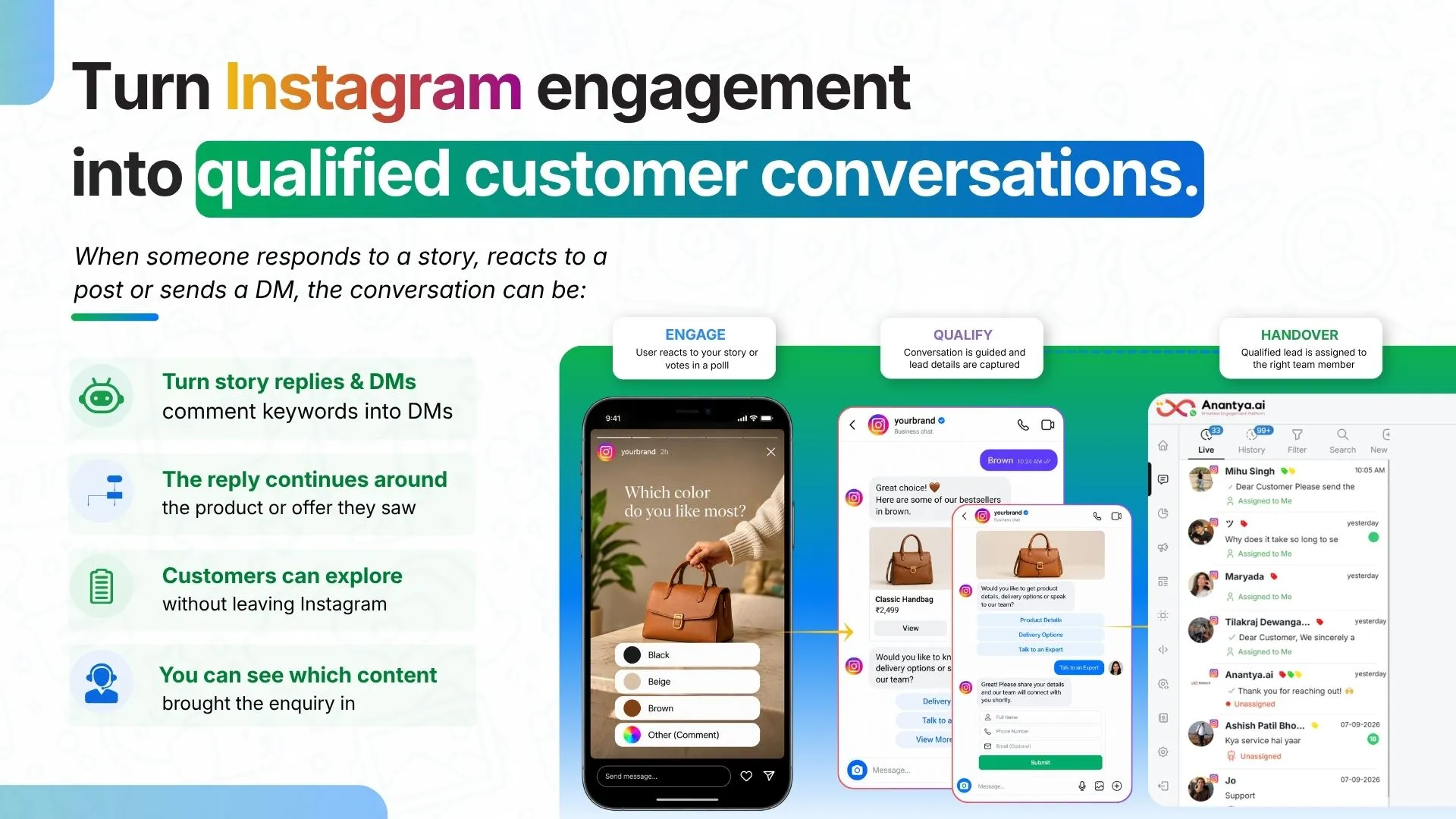
Turn Instagram Engagement Into Customer Conversations
Instagram content can generate interest, but businesses need a way to respond when that interest turns into a question.
A customer who interacts with a Story or campaign may want additional information about the product or service being promoted.
With the appropriate Instagram messaging workflow, that interaction can move into an automated conversation where the business provides information, understands the customer's requirement, and involves an agent when necessary.
The key advantage is that social engagement can become an actionable customer conversation instead of ending with a like, view, or comment.
Automate Facebook and Instagram Lead Qualification
Generating inquiries is only the first step in the sales process.
Sales teams also need to understand what the customer wants before they can have a meaningful conversation.
Anantya's chatbot-based workflows can be configured to ask predefined qualification questions and collect information relevant to the business.
For example:
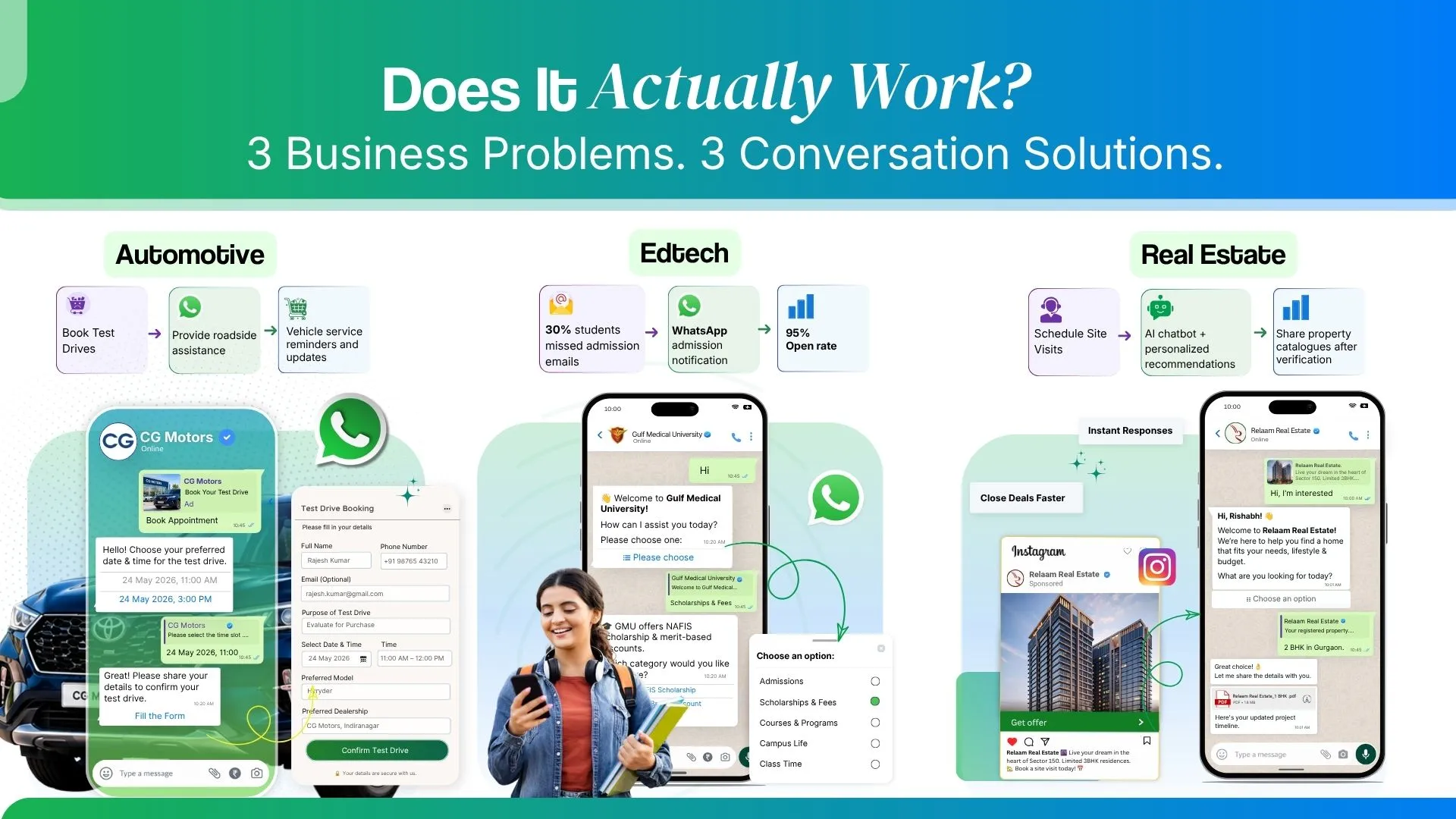
Real Estate
A chatbot could collect:
Preferred location
Property type
Budget
Buying timeline
Education
It could ask about:
Course of interest
Education level
Preferred program
Location
Automotive
It could collect:
Vehicle model
Variant
Budget
Preferred dealership
The specific questions depend on the business and its qualification criteria.
The result is a more informed sales conversation because the representative can receive relevant information before taking over the interaction.
Facebook Ads to WhatsApp: Connecting Acquisition and Conversation
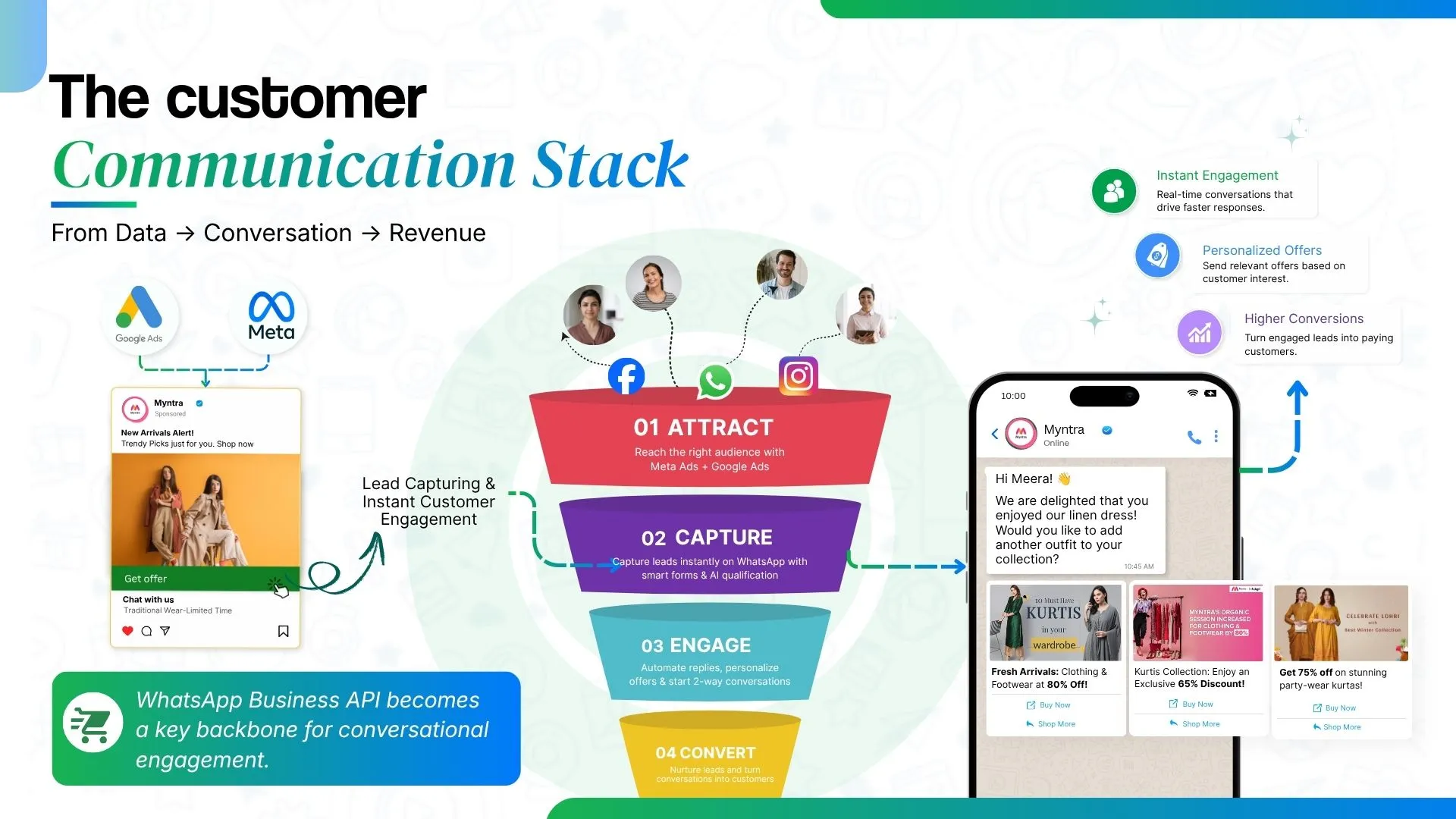
Businesses can also connect Facebook advertising with WhatsApp through Click-to-WhatsApp (CTWA) journeys.
This allows Facebook to function as the customer acquisition point while WhatsApp becomes the next stage of the conversation.
For example, a customer can interact with a Facebook advertisement and continue the conversation on WhatsApp, where the business can qualify the inquiry and involve a sales representative when required.
This is particularly useful for businesses that already use WhatsApp for sales, support, or lead management.
Rather than treating advertising and customer communication as separate activities, businesses can connect them into a more continuous customer journey.
Instagram Campaigns and Lead Generation
Instagram campaigns can similarly become entry points for structured customer conversations.
A customer who responds to a campaign may have questions about a product, service, price, availability, or suitability.
Instead of requiring an agent to manually handle every initial inquiry, chatbot automation can help provide information and collect the details required for qualification before the conversation reaches the relevant sales representative.
This creates a more organized path from campaign engagement to sales follow-up.
24/7 Customer Engagement With Social Media Chatbots
One of the practical benefits of chatbot automation is that customer engagement does not have to stop when the working day ends.
A customer may send a message outside business hours. The chatbot can provide an immediate first response, answer predefined questions, or capture information that can be followed up by the relevant team later.
This gives businesses an automated first-response layer while still allowing human agents to handle conversations that require personal assistance.
The goal is not to replace customer-facing teams.
It is to ensure that a customer does not receive no response simply because an agent is unavailable at that moment.
Intelligent Agent Routing: Get Customers to the Right Team
Automation becomes more useful when it knows when a conversation needs to move to a human and where it should go.
For example, a customer asking about a product may need sales, while an existing customer reporting an issue may need support.
Anantya can use conversation requirements and routing logic to direct interactions toward the appropriate team.
This allows businesses to combine:
Automation for repetitive interactions
with
Human assistance for conversations that need expertise or intervention.
The result is a more structured handoff between chatbots and customer-facing teams.
One Team Inbox for Facebook, Instagram and WhatsApp
Managing Facebook, Instagram, and WhatsApp conversations separately can make customer communication harder to coordinate.
Anantya brings supported conversations from these channels into a centralized Team Inbox, giving customer-facing teams one environment to manage and respond to conversations.
But the Team Inbox is more than a shared place to read messages. It works alongside Anantya's broader conversational engagement and automation capabilities.
What can teams do from the Team Inbox?
Manage conversations centrally
Agents can view and respond to customer conversations from supported channels within the same workspace.
Route conversations
Customer inquiries can be directed to the appropriate sales, support, or service team based on the nature of the conversation.
Combine automation with human support
Chatbots can handle initial questions and collect customer information before handing the conversation to an agent when human assistance is required.
Continue conversations with context
When an automated interaction is handed over to a human agent, the agent can continue the conversation rather than requiring the customer to repeat the entire interaction.
Manage multiple customer conversations
Teams can handle ongoing customer interactions across supported channels from a centralized environment.
This gives businesses a connected communication layer across Facebook, Instagram, and WhatsApp, while allowing automation and human agents to work together.
Key Benefits of Facebook and Instagram Integration
Centralized customer communication
Bring supported Facebook and Instagram conversations into a centralized environment instead of managing each channel independently.
Faster first responses
Chatbots can immediately handle common questions and guide customers toward the appropriate next step.
24/7 customer engagement
Automated workflows can provide first responses and capture information outside normal business hours.
Reduced repetitive workload
Frequently asked questions and initial interactions can be automated, allowing agents to focus on conversations that require human assistance.
Better lead capture
Social media conversations can be converted into structured lead information through chatbot-based qualification.
More context for sales teams
Sales representatives can receive information collected during the initial conversation instead of starting the qualification process from scratch.
Faster team routing
Customer inquiries can be directed toward the relevant sales, support, accounts, or service team.
Better use of social campaigns
Facebook and Instagram campaigns can become entry points into structured customer conversations rather than remaining isolated marketing activities.
Connected customer journeys
Facebook, Instagram, and WhatsApp can work together as different touchpoints within a broader customer communication strategy.
Facebook & Instagram Integration: Before vs. After
The objective is not to eliminate human conversations. It is to automate repetitive interactions and make the transition to human assistance more organized.
Facebook and Instagram Integration Use Cases by Industry
Facebook and Instagram messaging automation can be adapted to different customer-facing industries.
E-commerce & Retail
Businesses can use social conversations to answer product questions, provide availability information, capture requirements, and support purchase journeys.
Healthcare
Facebook and Instagram can act as entry points for service inquiries and appointment-related conversations before routing customers to the appropriate team.
Education
Educational institutions can use social campaigns and messaging to answer course-related questions and collect initial student requirements before connecting them with counselors.
Real Estate
Real estate businesses can collect information such as preferred location, property type, and budget before connecting prospective buyers with sales representatives.
Automotive
Dealerships can use social conversations to handle vehicle inquiries, understand customer preferences, and route relevant leads to sales teams.
Beauty & Cosmetics
Instagram conversations can support product inquiries, recommendations, and purchase assistance.
Hospitality
Hotels and hospitality businesses can use social messaging to answer property and service questions and direct relevant inquiries toward booking teams.
The chatbot questions, qualification criteria, routing rules, and subsequent customer journey can be customized according to the business process.
Turn Social Media Conversations Into Customer Journeys
Facebook and Instagram can be the first place where customers discover a business, see a campaign, ask a question, or express purchase intent.
The opportunity for businesses lies in what happens after that interaction.
With Anantya.ai, social conversations can become part of a broader customer communication process that combines centralized messaging, chatbot automation, lead qualification, team routing, and human support.
Instead of leaving customer inquiries inside individual social media platforms, businesses can bring supported conversations into a connected communication environment and move customers toward the right sales, support, or service team.
And where appropriate, Facebook and Instagram interactions can also connect with WhatsApp API journeys. Connect your social conversations. Automate the repetitive work. Qualify the right leads. Get customers to the right team.
Explore Facebook and Instagram integration with Anantya.ai.